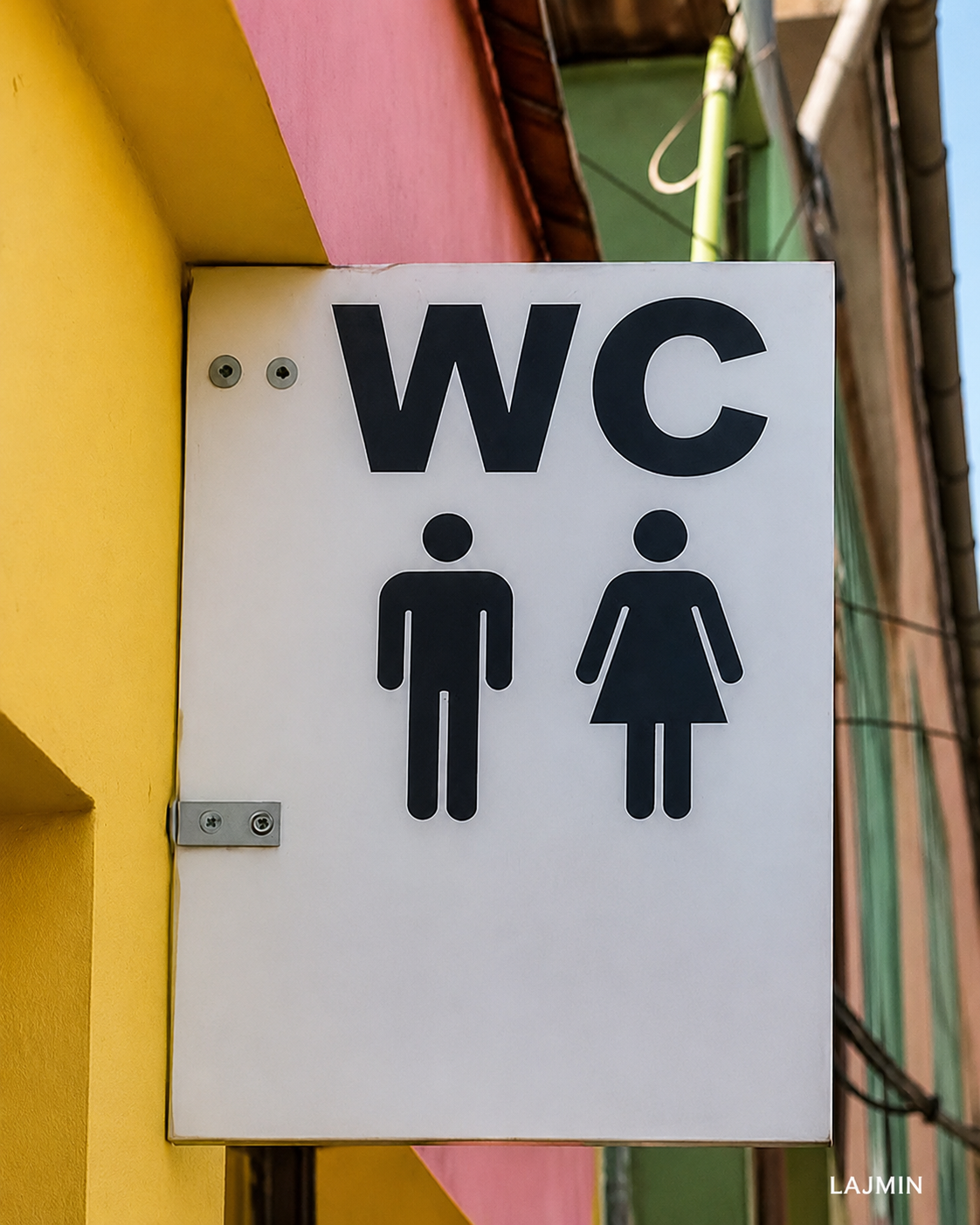
If you’ve ever seen a restroom labeled “WC”—especially in Europe, airports, or older buildings—and wondered what it stands for, you’re not alone. Many people assume it might mean “Women’s Closet,” “Washroom Compartment,” or something similar.
The truth? It’s much simpler than that—and it dates back centuries.
🚽 What “WC” actually means
WC = Water Closet
Yes, literally that.
The term “water closet” first appeared in 19th-century England to describe a room with a flushing toilet, at a time when many people still used outdoor toilets or indoor chamber pots.
It was called a “closet” because early indoor toilets were often placed in small private rooms—like a separate enclosed space—connected to a water system for flushing.
💡 Over time, “WC” became a standard abbreviation used in many parts of the world to indicate public toilets.
🌍 Where you still see “WC” today
Europe: Very common on public restroom signs (France, Germany, Italy, and others)
Airports and international locations: Used to make signage universally understandable
Older buildings: Hotels and historic houses with traditional infrastructure
Meanwhile:
USA/Canada: More commonly use “Restroom,” “Bathroom,” or “Lavatory”
United Kingdom: Often uses “Toilet” or “Loo,” although “WC” can still be seen in formal or older settings
💡 Why Americans don’t use “WC” much
The term “water closet” gradually fell out of everyday use in North America during the 20th century. Today, many people only encounter it while traveling or seeing it in older media and signage.
❤️ Final thought
Language is like a time archive.
That small “WC” sign is not just a label—it’s a reminder from the Victorian era, when modern sanitation systems were first transforming public health and daily life.
Next time you see it, just remember: you’re not only entering a restroom… but stepping into an invention that has shaped human hygiene for more than 150 years. 💧