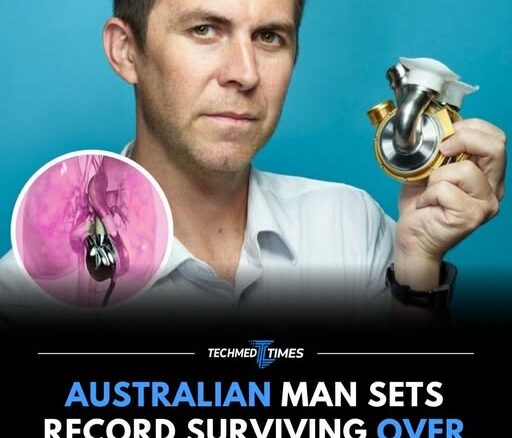
It may sound like something from a science fiction movie, but this story is completely real—and it’s making history. An Australian man became the first person ever to live more than 100 days with a fully artificial titanium heart. No natural pulse. No human heartbeat. Just a steady, mechanical rhythm keeping him alive.
Doctors replaced his failing heart with a specially designed titanium device that mimics how a real heart pumps blood. Unlike a normal heart, this device doesn’t create a pulse. Instead, it provides a continuous flow of blood throughout the body, ensuring that all organs receive the oxygen they need. The result is astonishing: a person living a normal life without an actual heartbeat.
But this achievement is about more than survival. It shows how far modern medicine has come. Scientists and engineers have proven that it’s possible not only to support life, but to recreate one of the body’s most vital organs. This could change the future for patients suffering from severe heart conditions, especially those who are unable to receive a donor transplant.
The titanium heart itself is built with advanced materials often used in aerospace technology. It is strong, lightweight, and resistant to corrosion—perfect for long-term use inside the human body. These qualities make it a promising solution for people who need a durable and reliable alternative to a biological heart.
For over three months, this man lived, walked, and carried on with daily life, all without a traditional heartbeat. His journey is not just a medical breakthrough—it’s a powerful reminder of what human innovation can achieve.
As technology continues to advance, stories like this show that the future of medicine is already here. And sometimes, it doesn’t beat—it flows.