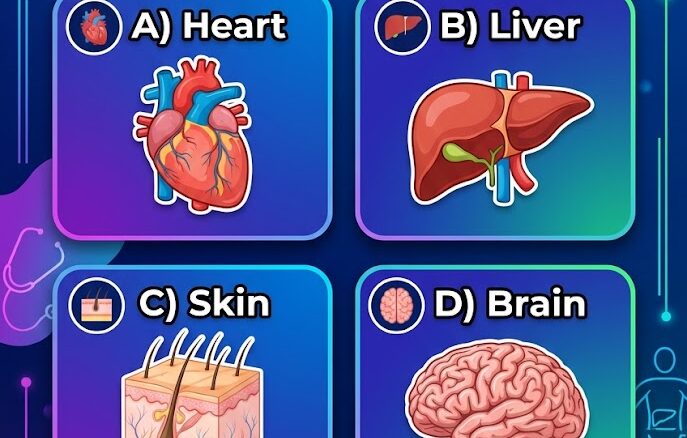
What is the BIGGEST organ in the human body? Many people immediately think of the heart, brain, or even the liver, but the correct answer often surprises most. The largest organ in the human body is the skin. Yes, the skin you see and touch every day is not just a covering, but a complex living organ that protects everything inside you.
The skin is made of three main layers: the epidermis, dermis, and subcutaneous tissue. Together, they form a protective shield that regulates temperature, prevents dehydration, and defends the body against bacteria and harmful UV rays. It also helps you feel sensations like heat, cold, pressure, and pain.
In an average adult, the skin covers about 1.5 to 2 square meters of surface area and can weigh up to 4–5 kilograms. That makes it heavier and larger than any internal organ. It is constantly renewing itself, shedding dead cells and producing new ones every day.
Without the skin, the human body would not survive even a few hours. It is truly a living barrier that keeps everything working properly inside.
So next time you look in the mirror, remember that what you see is not just appearance—it is your body’s largest and most important protective organ.
This simple fact reminds us how incredible the human body really is, and why protecting your skin through hydration, nutrition, and sun care is essential for long-term health and overall well-being every day of your life matters most always protect it.