Battery technology plays a crucial role in modern life. From smartphones and laptops to electric vehicles and renewable energy systems, the performance of batteries affects how efficiently people work, travel, and stay connected. As demand for faster, more reliable energy storage continues to grow, researchers around the world are searching for ways to overcome the limitations of current battery designs.
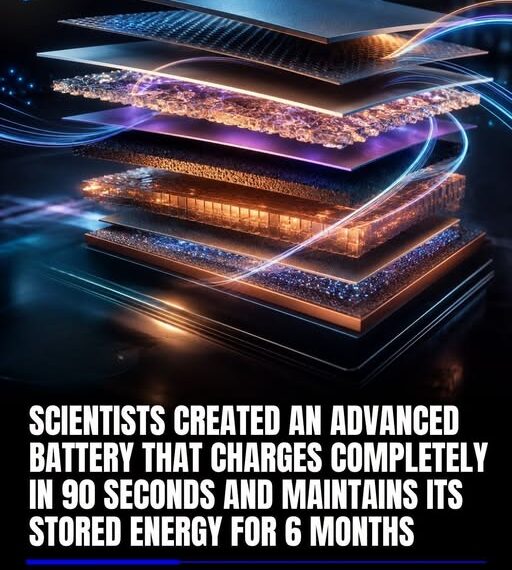
A recent scientific development has attracted significant attention because it could address two of the biggest challenges in energy storage at the same time: charging speed and long-term energy retention. According to reports, researchers have developed a battery capable of reaching a full charge in just 90 seconds while retaining its stored energy for up to six months.
Why Faster Charging Matters
One of the most common frustrations with modern technology is waiting for devices to recharge. Although charging speeds have improved considerably over the past decade, many batteries still require significant time to reach full capacity.
For smartphone users, faster charging means less downtime and greater convenience throughout the day. For electric vehicle owners, it could help reduce one of the main concerns associated with EV adoption—charging time compared to refueling a traditional gasoline-powered vehicle.
A battery that can charge in just 90 seconds could dramatically change user expectations across multiple industries. Instead of planning around charging schedules, consumers could quickly power their devices and continue with their daily activities almost immediately.
The Importance of Long-Term Energy Storage
Charging speed is only one part of the equation. Energy retention is equally important, especially as the world increasingly relies on renewable energy sources such as solar and wind power.
Unlike conventional power generation, renewable energy production often depends on weather conditions and time of day. Effective energy storage allows excess electricity to be saved and used when demand increases or production decreases.
A battery capable of maintaining stored energy for up to six months could offer significant advantages for backup power systems, emergency energy reserves, and large-scale renewable energy projects. Improved storage efficiency could reduce energy waste and enhance the reliability of power networks.
Potential Impact Across Industries
If this technology proves viable for large-scale manufacturing, its applications could extend far beyond consumer electronics.
In the automotive sector, ultra-fast charging batteries could make electric vehicles more practical for long-distance travel. Reduced charging times may help address range anxiety and encourage broader adoption of clean transportation.
For businesses and industries, enhanced energy storage could improve operational efficiency and lower costs associated with energy management. Data centers, telecommunications infrastructure, and critical facilities could benefit from more dependable backup power solutions.
Meanwhile, renewable energy providers could gain new tools for storing electricity generated during peak production periods, helping create a more stable and sustainable energy ecosystem.
Challenges Before Commercialization
While laboratory breakthroughs often generate excitement, transitioning from research to commercial products can take time. Scientists must verify long-term durability, safety, manufacturing costs, and scalability before a new battery technology can be widely adopted.
Many promising battery innovations have shown impressive results in controlled environments but faced challenges when moving into mass production. For this reason, experts typically caution that additional testing and development are necessary before consumers can benefit from such advances.
The development of a battery that can fully charge in 90 seconds while retaining energy for up to six months highlights the rapid pace of innovation in energy storage technology. Although further research and real-world validation are needed, the concept represents an exciting step toward more efficient and practical battery solutions.
As demand for cleaner energy, portable electronics, and electric transportation continues to rise, breakthroughs like this could help shape the next generation of power storage. If successfully commercialized, such technology has the potential to transform how energy is stored, distributed, and used across the globe, making everyday devices and future energy systems more efficient than ever before.