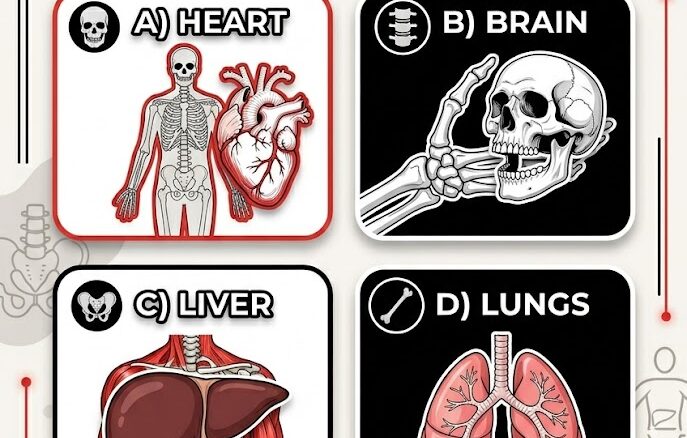
What organ uses the most energy in the body? Many people assume it is the heart, because it never stops beating, or the muscles, because they move us throughout the day. Others might think the liver, since it performs so many chemical processes. But the correct answer is actually surprising to many.
The organ that uses the most energy in the human body is the brain.
Even though the brain only makes up about 2% of total body weight, it consumes around 20% of the body’s total energy at rest. This means that one small organ is responsible for a huge portion of your daily energy use, even when you are sleeping or doing nothing at all.
The brain needs this energy to perform millions of tasks every second. It controls breathing, heartbeat, movement, memory, emotions, and decision-making. Every thought you have, every word you speak, and every action you take requires constant brain activity.
Neurons in the brain are always communicating with each other using electrical and chemical signals. This nonstop activity requires a steady supply of glucose and oxygen, which is why proper nutrition and good blood flow are so important for mental performance.
During childhood and adolescence, the brain uses even more energy because it is still developing and forming new connections.
So even when your body is resting, your brain is working harder than almost any other organ.
In the end, the brain proves that size doesn’t determine power. It is small compared to the rest of the body, but it is the most energy-demanding and one of the most vital organs, quietly running everything you do every single second of your life without pause or rest.