
You’re Not Weak. You’re Just Using the Wrong Weights in the Gym
Many people quit the gym because they believe they are not strong enough. They see others lifting heavy weights, performing advanced exercises, and making impressive progress. As a result, they start comparing themselves to more experienced athletes and assume they are weak.
In reality, the problem is often much simpler: they are using the wrong weights.
Fitness experts agree that choosing the right resistance level is one of the most important factors in building strength, muscle, and confidence. Lifting weights that are too heavy can lead to poor form and injuries, while weights that are too light may not provide enough challenge for the muscles to grow.
Why Weight Selection Matters
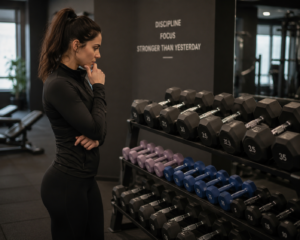
When you exercise, your muscles adapt to the stress placed upon them. This process is known as progressive overload. According to the American College of Sports Medicine, gradual increases in training resistance are essential for improving muscular strength and endurance.
If the weight is too heavy, you may struggle to complete repetitions correctly. This increases the risk of injuries to the joints, tendons, and muscles.
If the weight is too light, your body receives little stimulus for growth, which can slow progress and lead to frustration.
The goal is to find a weight that challenges you while allowing you to maintain proper technique throughout the exercise.
Signs You’re Using Weights That Are Too Heavy
You may be lifting too much if:
- Your form breaks down during the exercise.
- You cannot complete the recommended number of repetitions.
- You need excessive momentum to move the weight.
- You experience joint pain instead of muscle fatigue.
- You regularly feel exhausted rather than challenged.
Many beginners mistakenly believe that heavier always means better. However, strength training is about consistency and proper execution, not ego.
Signs You’re Using Weights That Are Too Light
On the other hand, your weights may be too light if:
- You can easily perform more than 20 repetitions.
- You feel no muscle fatigue near the end of a set.
- Your workouts feel effortless.
- Your strength has not improved for several weeks.
A moderate challenge is usually the sweet spot for most fitness goals.
How to Find the Right Weight
A simple rule is to choose a weight that allows you to complete your target repetitions while making the final two or three reps feel difficult.
For example:
- Beginners focusing on general fitness can aim for 10–15 repetitions.
- Muscle-building programs often use 8–12 repetitions.
- Strength-focused training may use 4–8 repetitions with heavier loads.
If you can easily exceed the target range, increase the weight slightly. If you cannot complete the minimum number of repetitions with good form, reduce the weight.
The Power of Progressive Overload
Progressive overload means gradually increasing the demands placed on your muscles. This can be achieved by:
- Adding a small amount of weight.
- Performing more repetitions.
- Increasing the number of sets.
- Improving exercise technique.
- Reducing rest periods.
Research from the National Strength and Conditioning Association suggests that gradual progression is one of the most effective methods for long-term strength and muscle development.
Don’t Compare Yourself to Others
One of the biggest mistakes gym-goers make is comparing their starting point to someone else’s years of experience.
Every experienced lifter once started with light weights. Their success came from patience, consistency, and proper progression—not from lifting the heaviest weights on day one.
Your fitness journey should focus on becoming stronger than you were yesterday, not stronger than the person training next to you.
Final Thoughts
If you’re struggling in the gym, it doesn’t necessarily mean you’re weak. More often, it means your training approach needs adjustment.
The right weight should challenge you, allow proper form, and help you progress steadily over time.
Remember: fitness is not about impressing others. It is about building a stronger, healthier version of yourself through consistent effort and smart training choices.
The next time you feel discouraged, ask yourself one simple question:
“Am I weak, or am I simply using the wrong weight?”
The answer could completely change your approach to fitness.
“According to the American College of Sports Medicine, proper resistance training intensity is essential for improving muscular strength, muscle growth, and overall fitness adaptation.”
“The principle of progressive overload, widely recognized in exercise science, explains that muscles adapt and grow when training demands are gradually increased over time.”
“According to the National Strength and Conditioning Association, improper load selection and poor exercise technique significantly increase the risk of injury during resistance training.”
“Research in resistance training shows that moderate repetition ranges (commonly around 8–12 reps) are effective for muscle hypertrophy when performed with appropriate intensity.”
“Studies in resistance training programming indicate that insufficient training intensity may reduce the stimulus required for meaningful strength and muscle development.”
“According to strength training principles, including those outlined by the Progressive Overload, long-term progress requires gradually increasing training demands such as weight, repetitions, or volume.”
“Exercise adherence research shows that focusing on individual progress rather than social comparison can improve consistency and long-term training success.”