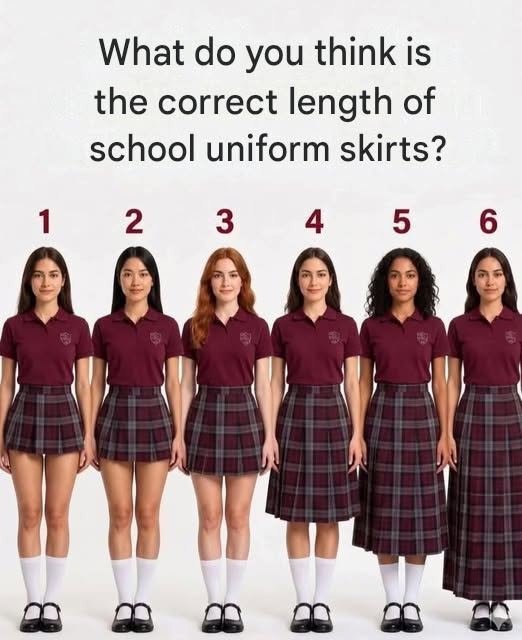
School uniforms have long been a topic of discussion among students, parents, teachers, and policymakers. While uniforms are often introduced to promote equality, reduce distractions, and create a sense of school identity, debates frequently arise over specific details of uniform policies. One question that continues to generate opinions is: what is the appropriate length for school uniform skirts?
There is no universal answer. Different schools, communities, and cultures have varying expectations regarding dress codes. What one school considers appropriate may differ significantly from another’s standards. However, the conversation offers an opportunity to explore how schools can balance professionalism, comfort, practicality, and student well-being.
Why Schools Have Uniform Guidelines
School uniform policies are generally designed to create a consistent appearance among students and minimize distractions in the learning environment. Dress codes often aim to ensure that clothing is suitable for classroom activities while maintaining a level of formality that reflects the school’s values.
When it comes to skirts, schools may establish guidelines based on factors such as mobility, safety, comfort, weather conditions, and cultural expectations. The goal is usually not just appearance, but also ensuring that students can participate comfortably in daily school life.
The Different Length Options
Skirt lengths can vary considerably. Some schools allow skirts that fall above the knee, while others prefer knee-length or below-the-knee styles. Longer designs may be required in certain educational or cultural settings.
Very short skirts often raise concerns about practicality and comfort during everyday activities such as sitting in class, walking between lessons, or participating in school events. At the opposite end, ankle-length skirts may be viewed as less practical for active movement, sports, or certain school activities.
Between these extremes, many schools adopt policies that encourage moderate lengths that allow freedom of movement while maintaining a professional appearance.
Balancing Comfort and Practicality
One of the most important considerations is student comfort. A uniform should allow students to focus on learning rather than constantly adjusting clothing or worrying about dress-code compliance.
Many educators and parents view knee-length skirts as a practical middle ground. They typically provide comfort, flexibility, and ease of movement while meeting common school dress standards. This length is often considered suitable for a variety of school environments and activities.
However, comfort can be subjective. What feels practical for one student may not feel ideal for another. This is why some schools offer multiple uniform options, allowing students to choose between skirts, trousers, shorts, or other approved alternatives.
Cultural and Regional Differences
Uniform expectations are influenced by cultural traditions and social norms. In some countries, shorter skirts may be widely accepted as part of a standard school uniform. In others, more conservative lengths are preferred.
Climate can also play a role. Schools located in warmer regions may choose lighter and more flexible uniform designs, while colder climates often encourage longer or layered clothing options.
These differences highlight why there is no single skirt length that can be considered universally correct.
Moving Toward Student-Centered Policies
Modern discussions about school uniforms increasingly focus on student comfort, inclusion, and practicality. Rather than concentrating solely on appearance, many schools are reviewing policies to ensure they support students’ daily needs.
Experts often suggest that effective dress codes should be clear, fair, and focused on creating a positive learning environment rather than imposing unnecessary restrictions. Providing reasonable options can help students feel comfortable while still maintaining the goals of a uniform policy.
Conclusion
The question of the “right” school skirt length does not have a single answer. Different schools adopt different standards based on culture, practicality, climate, and educational philosophy.
For many schools, skirts that fall around the knee are often viewed as a balanced solution because they combine comfort, mobility, and a traditional uniform appearance. However, lengths slightly above or below the knee may also be appropriate depending on individual school policies.
Ultimately, the most successful uniform guidelines are those that respect students’ needs while supporting a comfortable, professional, and inclusive educational environment.