Lower back pain is one of the most common musculoskeletal problems worldwide, affecting hundreds of millions of people. Many individuals notice that the discomfort is worse right after waking up.
According to clinical health information from organizations such as the Mayo Clinic and Harvard Health Publishing, gentle movement in the morning can help reduce stiffness and improve spinal function throughout the day. Instead of starting the day with sudden bending or twisting, a short mobility routine can help prepare the spine and surrounding muscles for daily activity.
This article introduces an 8-minute morning routine designed to reduce stiffness, improve mobility, and support long-term back health.
Why Your Back Feels Stiff in the Morning
The sensation of stiffness in the morning is a normal physiological response. Research shared by Spine-health and other clinical education platforms explains that spinal discs absorb fluid overnight, which temporarily increases pressure within the spine.
As a result:
- The spine feels less flexible after waking up
- Sudden movements may trigger protective muscle tightening
- The lower back may feel “locked” or stiff
Medical guidance from institutions like the National Health Service (NHS) emphasizes that this is why gentle movement is recommended before engaging in more demanding physical activity.
Benefits of a Morning Mobility Routine
Evidence from the American College of Sports Medicine (ACSM) highlights that consistent mobility and activation exercises play an important role in musculoskeletal health.
A short daily routine can help:
- Reduce morning stiffness
- Improve spinal alignment and posture
- Activate core and glute muscles
- Decrease the risk of sudden strain injuries
- Support long-term mobility and movement quality
Clinical guidance from the Cleveland Clinic also supports the idea that strengthening stabilizing muscles such as the core and glutes can reduce pressure on the lower back over time.
The 8-Minute Morning Routine for Back Pain Relief
1. Breathing for Spinal Relaxation (90 seconds)
Begin lying on your back with knees bent. Place your hands on your lower ribs and focus on slow, controlled breathing.
- Inhale slowly through the nose
- Exhale longer than the inhale
- Repeat for several cycles
According to rehabilitation-focused approaches used in physical therapy, controlled breathing helps reduce muscular tension and allows the nervous system to transition from rest to movement more smoothly.
2. Pelvic Tilt Movement (90 seconds)
While lying on your back, gently tilt your pelvis forward and backward in coordination with your breath.
This type of movement is commonly recommended in clinical rehabilitation programs because it helps restore spinal mobility and activates deep stabilizing muscles.
3. Hamstring and Ankle Activation (1 minute)
Extend one leg upward gently while keeping the other leg bent. Hold a light stretch and rotate the ankle slowly before switching sides.
Tight hamstrings are frequently linked with increased stress on the lower back, a connection also discussed in physical therapy literature and spine-focused education resources.
4. Glute Bridge Activation (2 minutes)
With feet flat and knees bent, slowly lift your hips while engaging your core and glutes.
According to strength and rehabilitation principles supported by sports medicine organizations, the glute muscles play a major role in reducing load on the lumbar spine during daily movement.
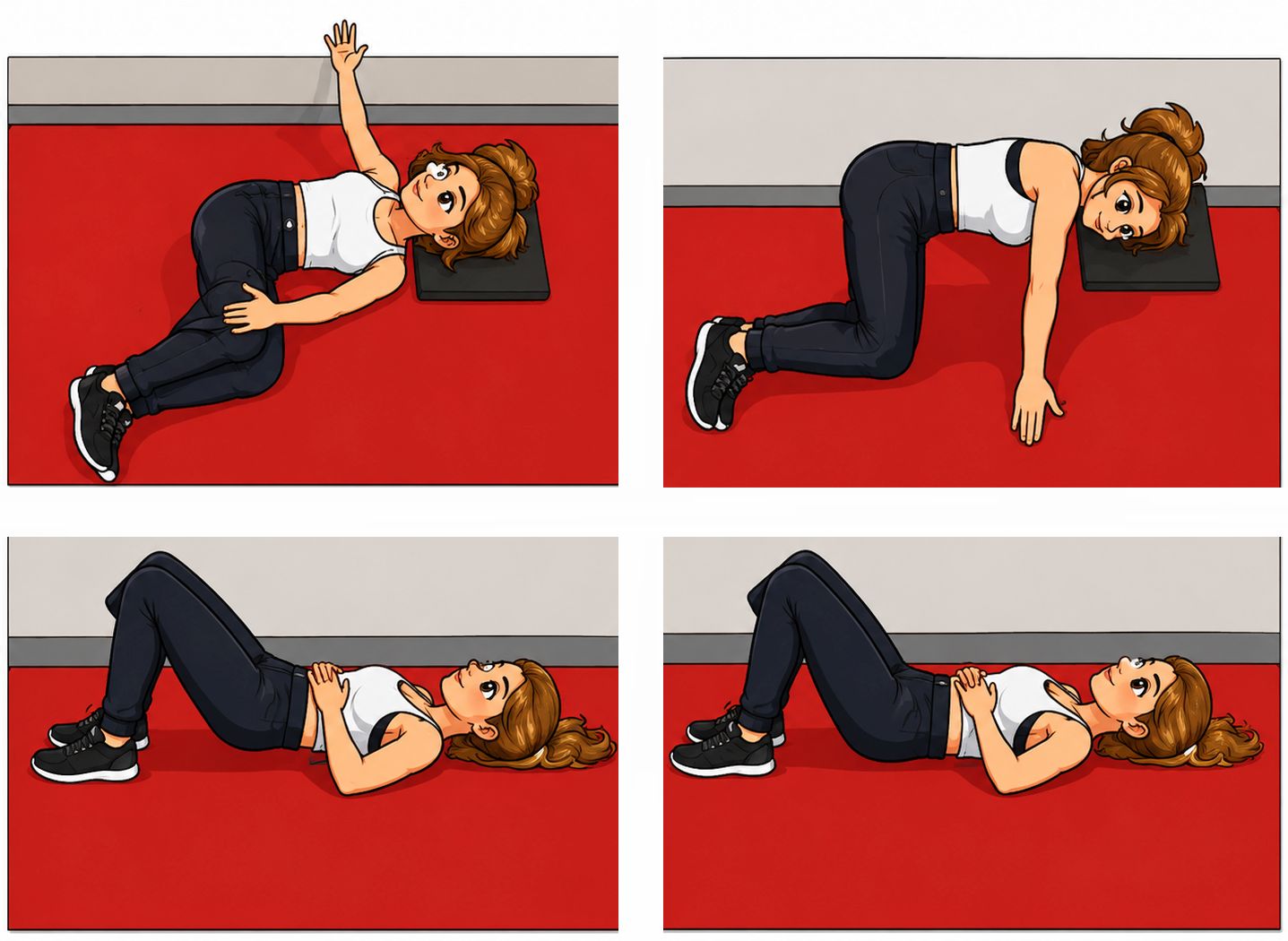
5. Mid-Back Rotation (2 minutes)
Lie on your side with knees bent and gently rotate your upper arm and chest open.
Clinical movement education sources often emphasize that improving thoracic (mid-back) mobility helps prevent overloading the lower back during rotation and bending movements.
Why This Routine Works
This routine is effective because it targets multiple evidence-based factors associated with lower back discomfort.
Research and clinical guidance consistently show that:
- Inactivity overnight increases stiffness and reduces joint mobility
- Weak or inactive stabilizing muscles contribute to spinal overload
- Gentle activation improves neuromuscular control
- Gradual movement reduces injury risk compared to sudden loading
Health institutions such as Harvard Medical School and the NHS consistently highlight that regular low-impact movement is one of the most effective non-invasive strategies for managing chronic back discomfort.
Who This Routine Is For
This routine is commonly recommended for:
- Individuals with mild to moderate lower back stiffness
- Office workers or sedentary individuals
- People experiencing morning discomfort
- Beginners returning to physical activity
However, clinical sources also emphasize that individuals with severe or persistent pain should consult a healthcare professional before starting any exercise program.
Final Thoughts
Even a short 8-minute routine can have a meaningful impact on how your back feels throughout the day. Instead of reacting to stiffness and pain, this approach focuses on preparing the body before daily stress begins.
As supported by major health organizations, consistency is the key factor — small daily mobility habits often lead to significant long-term improvements in spinal health and movement quality.
References
- Mayo Clinic – Back Pain Overview
Mayo Clinic – Back Pain Overview
Provides clinically reviewed information about causes of back pain and the role of movement, stretching, and activity in recovery.
- Harvard Health Publishing – Exercise and Back Pain
Harvard Health – Back Pain and Exercise
Explains how regular physical activity and low-impact exercise help reduce stiffness and improve spinal function.
- National Health Service – Lower Back Pain Guidance
NHS – Back Pain Information
Recommends staying active and using gentle exercises as a key part of back pain recovery and prevention.
- Cleveland Clinic – Low Back Pain Management
Cleveland Clinic – Low Back Pain
Highlights the importance of core and glute strength in reducing pressure on the lower back and improving stability.
- American College of Sports Medicine – Exercise Guidelines
ACSM Official Website
Provides evidence-based recommendations on exercise for musculoskeletal health, strength, and injury prevention.
- Spine-health – Spinal Mobility Education
Spine-health Back Pain Articles
Offers detailed explanations of spinal mechanics, morning stiffness, and mobility-based rehabilitation approaches.
- National Institute of Neurological Disorders and Stroke – Back Pain Information
NINDS Back Pain Information
Provides scientific and clinical information on causes, symptoms, and treatment approaches for lower back pain.