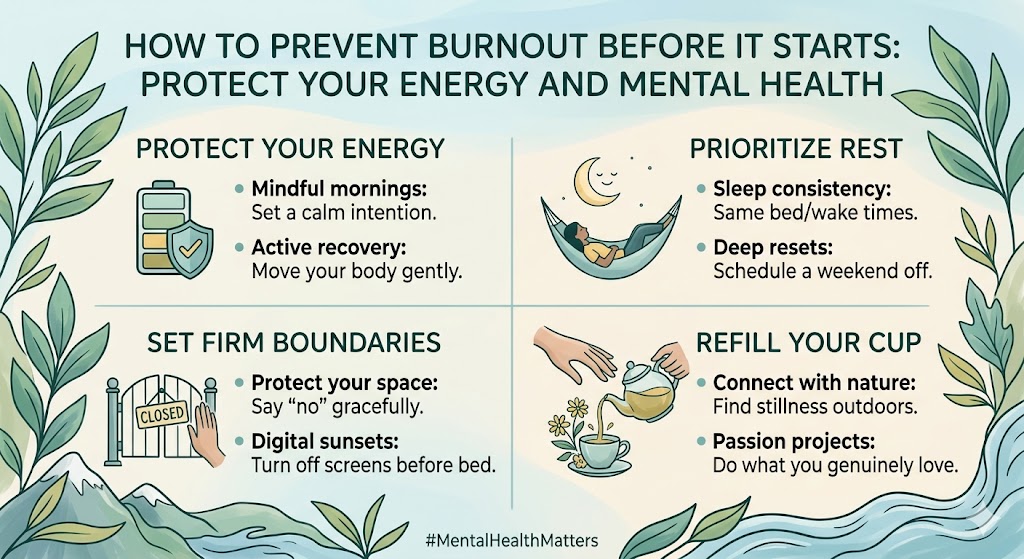
Modern life often demands constant attention, productivity, and adaptability. Between work responsibilities, personal commitments, and digital distractions, many people find themselves running on empty without realizing it. The key to long-term well-being is learning how to prevent burnout before it starts rather than waiting until exhaustion becomes overwhelming.
Burnout usually develops slowly. It is not caused by one difficult day or a single stressful event, but by continuous pressure without enough recovery. By recognizing early warning signs and creating healthier routines, you can protect your energy, improve focus, and maintain a more balanced lifestyle.
What Is Burnout and Why Does It Happen?
Burnout is a state of emotional, mental, and physical exhaustion that develops after prolonged periods of stress. Although many people associate burnout with demanding jobs, it can affect anyone dealing with ongoing pressure.
Students, parents, caregivers, entrepreneurs, and professionals can all experience burnout when responsibilities become too heavy and recovery time becomes too limited.
Common signs of burnout include:
- Persistent tiredness or low energy
- Reduced interest in activities you once enjoyed
- Difficulty concentrating
- Increased frustration or emotional sensitivity
- Feeling disconnected from your goals
- Lower productivity despite working harder
Understanding these signs early can help you make changes before stress becomes deeply established.
Prevent Burnout Before It Starts by Understanding the Causes
Burnout is often the result of several factors working together. Identifying what creates stress in your life is one of the first steps toward preventing it.
Constant Pressure and Chronic Stress
One of the biggest contributors to burnout is ongoing stress without proper recovery.
A busy schedule is not always harmful, but when every day feels like an emergency, the body and mind have little opportunity to recharge.
Long working hours, unrealistic deadlines, and constant demands can slowly reduce your emotional energy.
Poor Work-Life Balance
When work or responsibilities continue beyond healthy limits, personal time begins to disappear.
For example, checking messages late at night or thinking about unfinished tasks during rest periods can prevent your brain from fully relaxing.
Creating separation between responsibilities and personal life is essential for maintaining balance.
Unrealistic Expectations and Perfectionism
Many people experience burnout because they expect themselves to perform perfectly all the time.
Wanting to do your best can be positive, but constantly chasing perfection can create unnecessary pressure.
Healthy progress often comes from consistency, not from demanding flawless results.
Early Warning Signs You Should Pay Attention To
Burnout rarely appears suddenly. Instead, it builds through small signals that are often ignored.
Some early indicators include:
- Feeling exhausted even after sleeping
- Losing enthusiasm for activities you normally enjoy
- Becoming impatient or easily frustrated
- Avoiding tasks because everything feels overwhelming
- Feeling like your efforts are never enough
These signs are reminders that something needs adjustment. They are opportunities to improve your habits before exhaustion becomes more serious.
Practical Ways to Prevent Burnout Before It Starts
Preventing burnout does not require completely changing your lifestyle overnight. Small, consistent adjustments can have a major impact.
Create Healthy Boundaries
One of the most effective strategies is learning to separate work time from personal time.
Helpful boundaries may include:
- Turning off work notifications after certain hours
- Creating a clear end-of-day routine
- Protecting time for rest and relationships
- Avoiding unnecessary multitasking
When boundaries are clear, your mind gets a chance to recover.
Prioritize Quality Rest
Rest is a necessary part of productivity, not a sign of weakness.
Sleep, relaxation, and breaks allow your brain to process information, restore energy, and improve concentration.
Even short moments of recovery during the day can help reduce stress levels.
Simple recovery habits include:
- Taking short breaks during work
- Going for a walk
- Spending time outdoors
- Practicing relaxation techniques
- Disconnecting from screens before sleep
Focus on Meaningful Goals
People often experience burnout when they feel their efforts have no clear purpose.
Connecting daily tasks with personal values can make challenges feel more manageable.
Ask yourself:
“Why does this goal matter to me?”
A clear sense of purpose can increase motivation and make difficult periods easier to handle.
Build Daily Anti-Burnout Habits
Small habits repeated regularly create protection against long-term stress.
Consider adding these practices to your routine:
✔ Plan your day realistically
✔ Take regular movement breaks
✔ Keep a consistent sleep schedule
✔ Spend time with supportive people
✔ Maintain hobbies outside work
✔ Practice gratitude and reflection
✔ Reduce unnecessary digital distractions
These simple actions help preserve mental energy over time.
Work-Life Balance Checklist
Use this checklist to create a healthier daily rhythm:
✔ Set achievable goals
✔ Avoid filling every moment with tasks
✔ Learn when to say no
✔ Schedule relaxation like any other important activity
✔ Leave space for friendships and family
✔ Accept progress instead of demanding perfection
✔ Make time for activities that recharge you
Balance is not about doing less. It is about managing your energy wisely.
Building Long-Term Resilience
Preventing burnout is also about developing emotional resilience—the ability to adapt during difficult periods.
Resilient people understand that challenges are temporary and that recovery is part of success.
They focus on:
- Learning from stressful experiences
- Maintaining healthy routines
- Asking for support when needed
- Adjusting expectations realistically
Resilience allows you to continue growing without constantly sacrificing your well-being.
Final Thoughts
Learning how to prevent burnout before it starts is one of the most valuable skills for modern life. In a world where people are often encouraged to do more, achieving balance requires intentional choices.
Burnout is not simply caused by being busy. It develops when stress continues without enough recovery, support, or healthy boundaries.
By protecting your energy, recognizing warning signs, and building sustainable habits, you can maintain motivation and productivity while also supporting your mental health.
Small changes today can create a healthier, more balanced future.
Related Articles:
- How to Build Healthy Habits for Long-Term Success
- The Psychology of Motivation and Personal Growth
- Simple Ways to Manage Stress in Everyday Life
- Why Work-Life Balance Matters for Mental Well-Being
Further Reading:
World Health Organization (WHO) – Mental Health and Workplace Well-Being Resources
Harvard Health Publishing – Stress Management and Emotional Health Research
Mayo Clinic – Stress Symptoms and Healthy Lifestyle Guidance