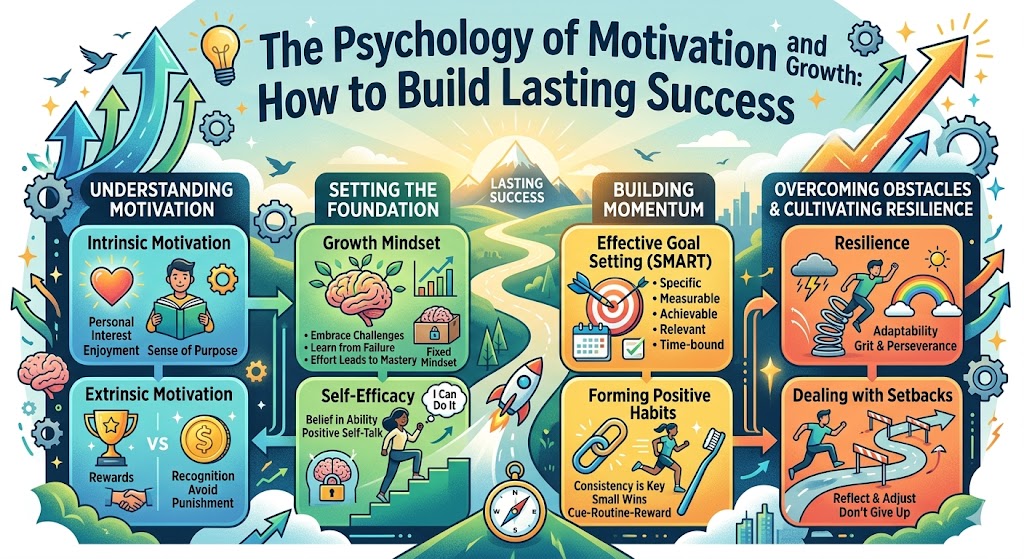
Success rarely happens because of a single moment of inspiration. More often, it is created through daily choices, consistent habits, and the ability to continue moving forward even when challenges appear. The psychology of motivation and personal growth explains why some people remain focused on their goals while others struggle to maintain progress over time.
Understanding how motivation works can help you develop stronger habits, improve self-discipline, and create meaningful changes in your personal and professional life.
What Is Motivation and Why Does It Matter?
Motivation is the internal and external force that encourages people to take action. It influences the decisions we make, the goals we pursue, and the effort we put into overcoming obstacles.
Many people believe motivation is simply about having strong willpower. However, psychologists view motivation as a complex combination of emotions, values, environment, habits, and personal experiences.
Some motivations come from within, while others are influenced by outside factors.
Intrinsic and Extrinsic Motivation Explained
Intrinsic Motivation: The Power From Within
Intrinsic motivation happens when an activity itself feels meaningful or rewarding.
Examples include:
- Learning a new skill because you enjoy improving
- Exercising because you value your health
- Creating something because the process feels fulfilling
This type of motivation is often more sustainable because it is connected to personal satisfaction rather than temporary rewards.
When people find meaning in what they do, they are more likely to continue even when progress feels slow.
Extrinsic Motivation: External Rewards and Recognition
Extrinsic motivation comes from outside influences such as money, praise, achievements, or social recognition.
For example, someone may work harder because they want a promotion, better grades, or approval from others.
Although external rewards can encourage action, they may lose their influence once the reward disappears. The strongest long-term results usually come from combining external motivation with personal purpose.
Psychology of Motivation and Personal Growth: The Foundation of Improvement
Personal growth is the ongoing process of improving your skills, mindset, emotional awareness, and overall quality of life.
Growth does not usually happen through dramatic changes overnight. Instead, it develops through small improvements repeated consistently.
Several psychological principles support long-term development.
Developing a Growth Mindset
A growth mindset is the belief that abilities can improve through learning, practice, and effort.
People with this mindset tend to see challenges differently. Instead of viewing difficulties as proof of failure, they treat them as opportunities to improve.
A growth mindset encourages people to:
- Accept mistakes as part of learning
- Focus on progress instead of perfection
- Stay open to new experiences
- Continue developing their abilities
This approach can create stronger resilience and confidence over time.
The Importance of Self-Awareness
Self-awareness means understanding your thoughts, emotions, behaviors, and personal patterns.
When you recognize what motivates you, what distracts you, and what habits influence your decisions, you can create better strategies for reaching your goals.
For example, someone who knows they work better in the morning can organize important tasks during that time. Small adjustments like this can make personal development more realistic and effective.
Finding Purpose and Meaning
Purpose plays an important role in maintaining motivation. When people believe their actions have meaning, they often become more committed.
A clear purpose helps transform simple tasks into steps toward a bigger goal.
Whether it involves career growth, learning, health, or relationships, having a meaningful reason behind your actions creates stronger commitment.
Why Motivation Sometimes Disappears
Even highly motivated people experience periods when their energy and focus decrease.
Common reasons include:
- Stress and burnout
- Unclear goals
- Fear of failure
- Feeling overwhelmed
- Negative self-criticism
When a goal feels too large or impossible, the brain may respond with avoidance instead of action. This is why breaking goals into smaller steps is often more effective.
Recognizing these barriers allows you to create better solutions instead of blaming yourself for losing momentum.
Practical Ways to Strengthen Motivation
Motivation is not a fixed personality trait. It can be developed and improved through intentional habits.
Create Clear Goals
A vague goal can make progress difficult to measure.
Instead of saying:
“I want to become successful.”
Create a specific goal:
“I will spend one hour each day improving my professional skills.”
Clear goals give your mind direction and make achievements easier to recognize.
Divide Large Goals Into Smaller Actions
Big ambitions can feel overwhelming. Breaking them into smaller steps creates a sense of progress.
For example, writing a book becomes easier when you focus on:
- Creating an outline
- Writing regularly
- Reviewing small sections
- Improving gradually
Small wins help maintain confidence and motivation.
Build Consistent Daily Habits
Many people wait until they feel motivated before taking action. However, action often creates motivation.
Simple habits can support personal growth:
- Planning your day
- Exercising regularly
- Reading and learning
- Reflecting on progress
- Maintaining healthy routines
Over time, consistency becomes a powerful source of momentum.
The Role of Discipline in Long-Term Success
Motivation may help you start, but discipline helps you continue.
Discipline means following through even when enthusiasm decreases. Many successful people do not depend only on inspiration; they rely on systems and routines.
Athletes, entrepreneurs, writers, and professionals often achieve results because they create structures that make progress easier.
Building discipline transforms goals from occasional wishes into daily actions.
Daily Checklist for Building Motivation
✔ Define realistic goals
✔ Break difficult tasks into smaller steps
✔ Track your improvement
✔ Celebrate progress
✔ Replace negative thoughts with constructive thinking
✔ Maintain healthy routines
✔ Learn continuously
✔ Spend time with supportive people
Personal Growth Habits That Support Success
✔ Read or learn something valuable every day
✔ Reflect on experiences and lessons
✔ Practice gratitude
✔ Create weekly improvement targets
✔ Stay curious
✔ Focus on progress rather than perfection
Conclusion
The psychology of motivation and personal growth shows that lasting success is not created by temporary excitement alone. It comes from understanding yourself, developing useful habits, and taking consistent action.
Motivation provides the initial energy to begin, while discipline and personal growth help you continue.
By setting meaningful goals, improving your mindset, and focusing on small daily improvements, you can create positive changes that last.
Personal growth is not about becoming perfect. It is about becoming better over time through patience, awareness, and continuous effort.