Introduction
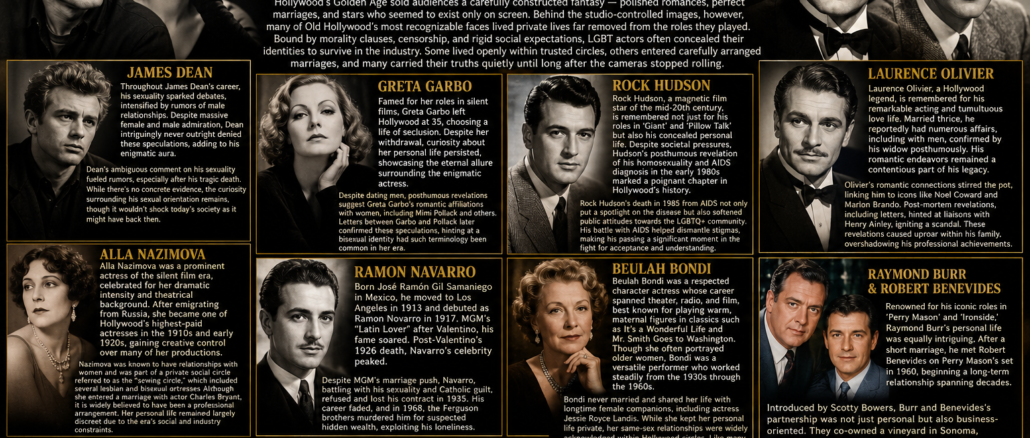
Hollywood’s Golden Age created an image of glamour, romance, and perfection that captivated audiences around the world. During the early and mid-20th century, major film studios carefully managed the public images of their stars, often controlling how actors dressed, behaved, and even whom they dated. At the same time, strict social expectations and industry rules made it difficult for many people to live openly as lesbian, gay, bisexual, or otherwise part of the LGBT community.
As a result, many actors and actresses kept important aspects of their personal lives private. Some entered marriages that helped protect their careers, while others maintained long-term relationships away from public attention. Today, historians, biographers, and archived personal letters offer a more complete understanding of the lives behind the screen personas.
Here are several notable figures whose stories provide insight into the challenges and realities of Hollywood during a very different era.
James Dean: An Enduring Mystery
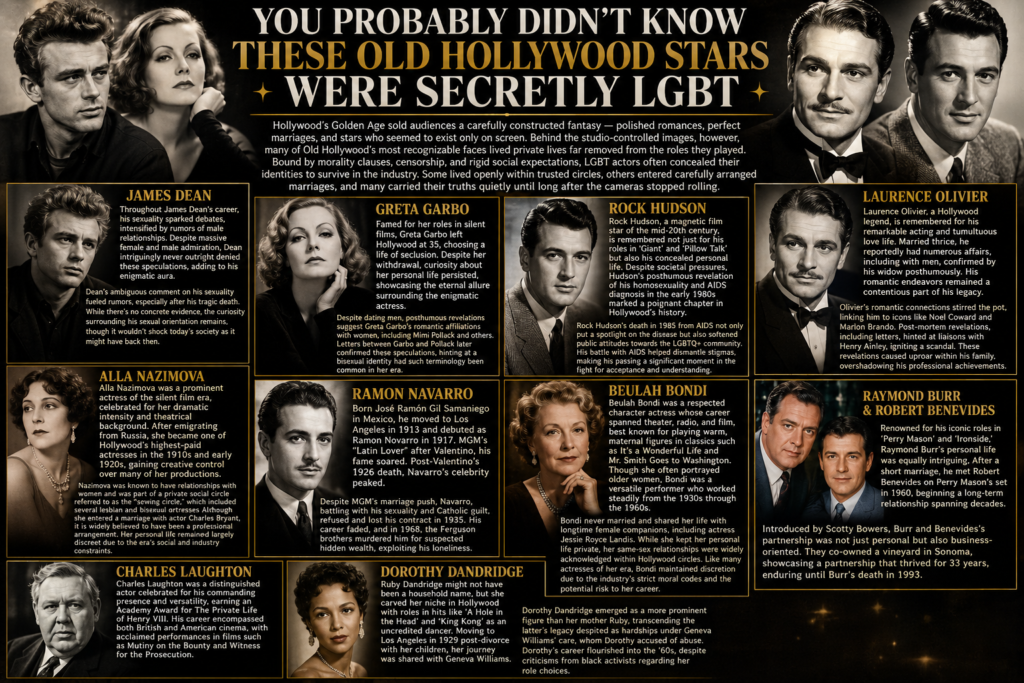
Few actors remain as fascinating as James Dean. Best known for his performances in films such as Rebel Without a Cause, Dean became a cultural icon despite a career cut short by his death at age 24.
Questions about Dean’s sexuality have persisted for decades. Biographers have suggested that he may have had relationships with both men and women, though definitive evidence remains limited. Dean himself rarely addressed such speculation publicly, contributing to the mystery that continues to surround his life and legacy.
His story highlights how personal identities were often left unspoken in an era when public disclosure could seriously damage a career.
Greta Garbo: Privacy Above All
Greta Garbo was one of the most celebrated stars of silent and early sound cinema. Known for her talent and distinctive screen presence, she retired from acting at just 35 years old and spent much of her later life away from the spotlight.
Years after her death, letters and personal correspondence revealed close emotional relationships with several women, including Mimi Pollak. These documents have led many historians to believe Garbo may have been bisexual or had romantic relationships with women.
While modern labels may not perfectly fit historical figures, Garbo’s story demonstrates how personal relationships were often hidden from public view during the early decades of Hollywood.
Rock Hudson and a Turning Point in Public Awareness
Rock Hudson was one of Hollywood’s biggest leading men, starring in films such as Giant and Pillow Talk.
Throughout most of his career, Hudson’s sexuality remained private. In 1985, he publicly acknowledged that he had AIDS, becoming one of the first major celebrities associated with the disease. His death later that year brought unprecedented public attention to the AIDS crisis.
Beyond his film achievements, Hudson’s story helped increase awareness of a major public health issue and encouraged broader discussions about discrimination, compassion, and healthcare.
Laurence Olivier and Complex Personal Histories
Widely regarded as one of the greatest actors of the 20th century, Laurence Olivier enjoyed a remarkable career in theater and film.
Following his death, biographers and historians examined letters and accounts suggesting that Olivier may have had relationships with both men and women. While details remain debated, these discussions illustrate how many public figures led lives that were more complex than their carefully crafted public images suggested.
Today, scholars often focus less on sensational details and more on understanding the social pressures that influenced personal decisions during that period.
Alla Nazimova and Hollywood’s “Sewing Circle”
Alla Nazimova was among the most influential stars of the silent film era. A successful actress and producer, she enjoyed an unusual degree of creative control for her time.
Nazimova has frequently been associated with a network of actresses and artists sometimes referred to as the “sewing circle,” a term linked to women who were believed to have same-sex relationships. Although much of the history remains difficult to verify completely, Nazimova is often cited as one of the earliest Hollywood figures connected to openly queer social circles.
Her story provides valuable insight into how LGBT communities found ways to connect despite widespread social restrictions.
Ramon Novarro’s Struggles with Fame and Identity
Ramon Novarro rose to prominence during the silent film era and became one of Hollywood’s most recognizable leading men.
Studio executives reportedly encouraged him to marry in order to maintain a marketable image. Novarro resisted such pressures, and his career eventually declined as industry expectations changed. Historians have since described his life as an example of the difficult choices many performers faced when personal identity conflicted with professional demands.
Beulah Bondi and a Life Kept Private
Character actress Beulah Bondi appeared in dozens of films and became known for portraying warm, maternal characters. Although she never married, she maintained close relationships with female companions throughout her life.
Like many performers of her generation, Bondi chose privacy over publicity when it came to personal matters. Her experience reflects the reality that many actors preferred discretion not because of shame, but because openness carried significant professional risks.
Raymond Burr and Robert Benevides
Television audiences remember Raymond Burr for starring in the television series Perry Mason and Ironside.
Burr shared a long-term relationship with Robert Benevides that lasted more than three decades. In addition to their personal partnership, they worked together in business ventures, including operating a vineyard.
Their enduring relationship is often cited as an example of the meaningful partnerships that existed behind the scenes in Hollywood, even when public acknowledgment was uncommon.
Charles Laughton and Elsa Lanchester
Charles Laughton and Elsa Lanchester formed one of Hollywood’s most intriguing marriages. Both were highly respected performers with successful careers.
Biographers have suggested that both may have been bisexual and that their marriage offered companionship while allowing each partner a degree of personal freedom. Their story illustrates how relationships sometimes operated differently from public expectations during an era of intense scrutiny.
Dorothy Dandridge and the Women Who Influenced Her Life
Dorothy Dandridge became one of Hollywood’s most groundbreaking performers, earning acclaim for her talent and helping break racial barriers in the entertainment industry.
Discussions about her personal life often intersect with the experiences of her mother, Ruby Dandridge, and family relationships that shaped her upbringing. While historical accounts vary, these stories provide additional context for understanding the challenges faced by performers navigating both personal and professional obstacles.
Conclusion
The history of Old Hollywood is often more complicated than the glamorous image presented on screen. Many actors lived during a time when revealing their sexual orientation could lead to professional consequences, public criticism, or social exclusion. As a result, privacy became a survival strategy for countless performers.
Today, examining these stories offers more than celebrity trivia. It provides a deeper understanding of social history, changing cultural attitudes, and the resilience of individuals who pursued successful careers while navigating significant personal challenges. By looking beyond the carefully managed studio images, we gain a richer and more human perspective on some of Hollywood’s most memorable stars.