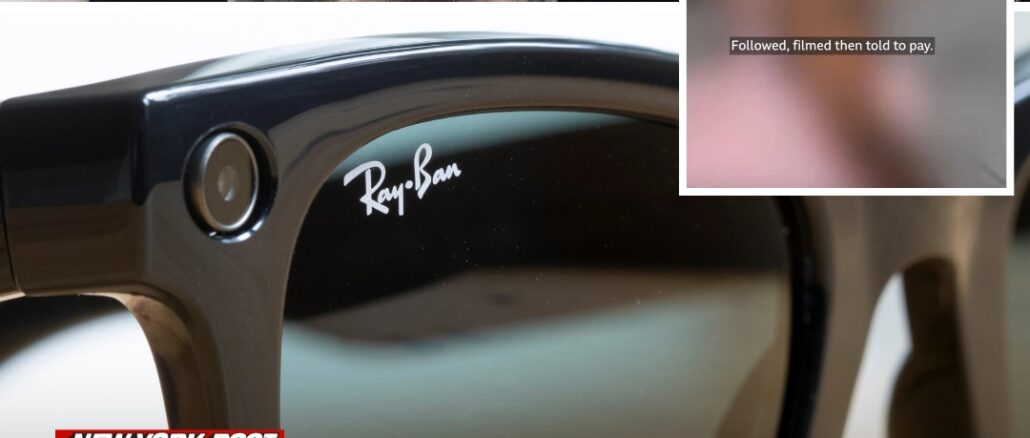
A British woman has issued a chilling warning about the risks of wearable tech after a stranger secretly filmed her using smart glasses—and then tried to charge her to remove the video.
The woman, who goes by “Alice,” said the encounter began outside a shopping center in London. A man approached her, making small talk and asking for her Instagram. At the time, she believed it was just an awkward interaction. What she didn’t realize was that she was being recorded the entire time.
“He didn’t have a phone or camera in my face,” she explained. “I had no idea.”
Days later, a friend sent her a video—of herself. The man had uploaded the footage online, where it quickly gained tens of thousands of views. Shocked and humiliated, Alice immediately reached out and asked for it to be removed.
His response made things worse.

He told her he would only take the video down as a “paid service.”
“I felt completely exploited and powerless,” she said. “I didn’t know where to turn.”
Alice refused to pay and reported the incident to police, but the case stalled due to lack of information about the man’s identity.
The video was eventually removed from one platform for violating harassment rules—but it didn’t end there. The man simply reposted it elsewhere.
He later claimed he meant no harm and described his content as “light-hearted,” even suggesting his message about payment had been misunderstood. Still, he refused to clarify why the video stayed online after Alice’s request.
This case highlights a growing trend: people using smart glasses to secretly film everyday interactions and turn them into viral content. Often, those filmed have no idea they’re being recorded—until it’s too late.
Critics have labeled the devices “predatory,” warning that they can easily invade privacy in deeply personal moments.
Alice now lives with constant anxiety, checking social media to see if the video resurfaces. She hopes her story will serve as a warning.
“If you don’t consent to being filmed, it can be dangerous,” she said. “It’s a complete violation of privacy.”