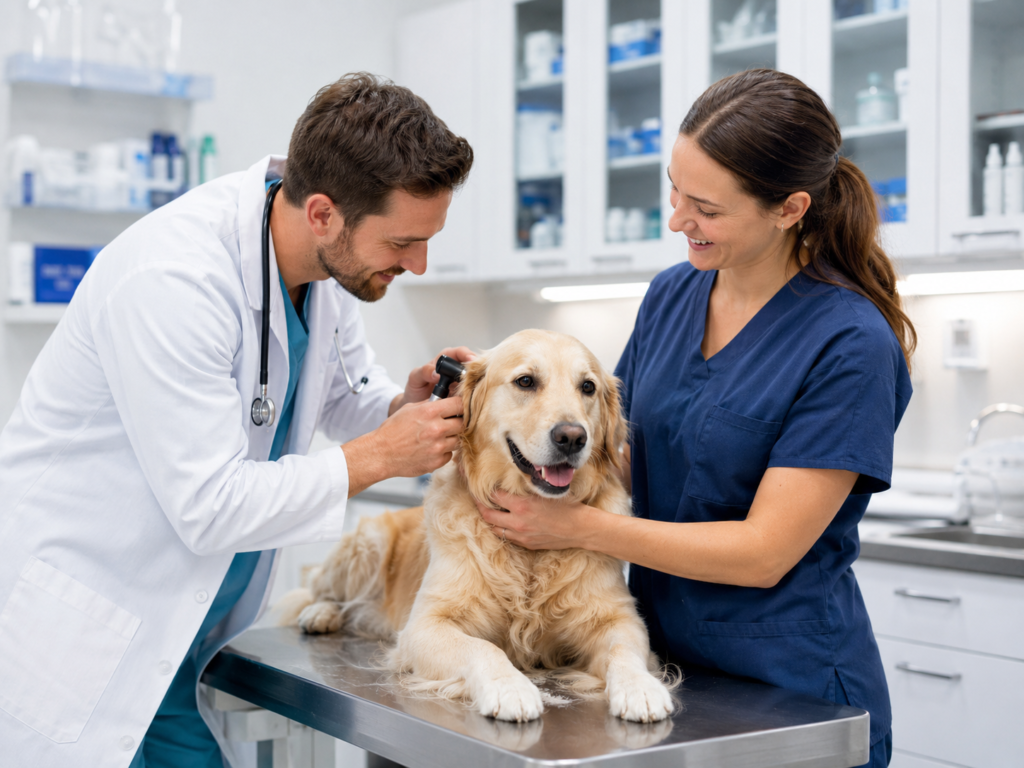
A veterinary clinic may look simple from the waiting room, but behind each appointment is usually a team of people handling very different responsibilities.
Some team members are involved directly in diagnosis and treatment. Others focus on nursing care, client communication, cleaning, scheduling, inventory, finances, or the daily organization of the practice.
The exact staff structure varies from one clinic to another. A small practice may rely on a few people who perform several duties, while a larger hospital may have dedicated teams for surgery, hospitalization, diagnostics, administration, and client services.
What matters most is that responsibilities are clear and that clinical tasks are performed by people who are appropriately trained and legally permitted to carry them out.
Veterinarian
The veterinarian is responsible for the medical assessment and treatment of animal patients.
This generally includes examining animals, investigating illness or injury, interpreting diagnostic findings, making treatment decisions, and prescribing medication where authorized.
A veterinarian’s typical responsibilities may include:
- Physical examinations
- Diagnosing disease and injury
- Ordering and interpreting laboratory tests
- Prescribing medication
- Creating treatment plans
- Performing surgical procedures
- Providing vaccinations and preventive care
- Managing emergency cases
- Monitoring hospitalized patients
- Maintaining medical records
- Communicating with pet owners
Veterinarians may work in general practice or develop additional expertise in fields such as surgery, dentistry, internal medicine, dermatology, emergency care, or diagnostic imaging.
Veterinary Technician or Veterinary Nurse
Veterinary technicians and veterinary nurses provide hands-on clinical support and play an important role in patient care.
The title used depends on the country or region, and the exact scope of practice can vary considerably.
Their work may include:
- Collecting blood, urine, and other samples
- Preparing samples for laboratory testing
- Assisting during examinations
- Preparing patients for surgery
- Monitoring anesthesia
- Caring for hospitalized patients
- Providing wound care
- Placing intravenous catheters where permitted
- Taking radiographs where legally allowed
- Administering medication under veterinary direction
- Maintaining clinical equipment
- Educating owners about aftercare
Technicians and nurses often spend significant time monitoring hospitalized animals and may be the first to notice changes in pain, appetite, breathing, temperature, or behavior.
Those observations can be extremely important to the veterinarian responsible for medical decisions.
Veterinary Assistant
Veterinary assistants support the clinical team with practical tasks and routine animal care.
Their responsibilities often depend on the clinic and their level of training.
Typical duties may include:
- Preparing examination rooms
- Safely assisting with animal restraint
- Cleaning kennels and treatment areas
- Feeding and walking hospitalized animals
- Restocking supplies
- Preparing equipment
- Cleaning and processing instruments
- Transporting animals within the clinic
- Supporting technicians and veterinarians
Assistants generally have fewer clinical responsibilities than veterinary technicians or nurses.
The distinction is important because certain procedures may be restricted by law to licensed or registered professionals.
Veterinary Receptionist
Reception staff are often the first people clients speak with.
Their work can strongly influence both the client experience and the flow of the entire clinic.
Common responsibilities include:
- Scheduling appointments
- Answering calls and emails
- Greeting clients
- Registering new patients
- Updating client information
- Processing payments
- Preparing invoices
- Sending reminders
- Managing waiting-room flow
- Passing urgent concerns to the clinical team
Receptionists also need to recognize when a conversation may indicate an emergency.
They are not expected to diagnose a patient, but they should know when a veterinarian or trained clinical team member needs to become involved quickly.
Practice Manager
The practice manager oversees the operational side of the clinic.
In a small practice, this role may be carried out by the clinic owner or a senior team member. Larger practices may employ a dedicated manager.
Responsibilities can include:
- Staff scheduling
- Recruitment
- Training coordination
- Payroll administration
- Budget monitoring
- Inventory oversight
- Supplier management
- Workplace procedures
- Client complaints
- Performance monitoring
- Supporting communication between departments
A good practice manager helps the clinical team focus on patient care while keeping daily operations organized.
Veterinary Surgeon or Surgical Veterinarian
The term veterinary surgeon can mean different things in different countries.
In some regions, it is simply the formal title for a veterinarian. In other settings, it may be used to describe a veterinarian who performs a significant amount of surgical work or has advanced surgical training.
Surgical responsibilities may include:
- Routine soft-tissue procedures
- Spay and neuter surgery
- Emergency procedures
- Orthopedic surgery
- Tumor removal
- Wound reconstruction
- Surgical consultations
- Postoperative planning
More complex procedures may require referral to a veterinarian with advanced training or specialist credentials.
Anesthesia and Surgical Monitoring
In some hospitals, anesthesia is monitored by specially trained veterinary technicians, nurses, veterinarians, or other appropriately qualified staff.
This may be a dedicated role in a large hospital, but in smaller clinics it is often part of a broader technician or nursing position.
Responsibilities may include:
- Preparing anesthesia equipment
- Assisting with patient preparation
- Monitoring heart rate and breathing
- Monitoring oxygenation and blood pressure
- Maintaining body temperature
- Recording anesthesia information
- Observing recovery
- Reporting changes immediately
The exact duties depend on professional training and local regulations.
Laboratory Responsibilities
Some large veterinary hospitals employ dedicated laboratory staff.
In smaller practices, laboratory work is often performed by veterinary technicians, nurses, or veterinarians.
Laboratory duties may include:
- Preparing blood or urine samples
- Operating analyzers
- Performing microscopy
- Recording test results
- Maintaining equipment
- Storing samples correctly
- Managing reagents
- Following laboratory hygiene procedures
Clear sample identification and accurate result recording are especially important because laboratory errors can affect treatment decisions.
Pharmacy and Medication Management
Medication handling may be managed by veterinarians, technicians, nurses, pharmacy staff, or other trained employees depending on local law.
Tasks may include:
- Preparing prescribed medication
- Labeling products
- Checking instructions
- Managing inventory
- Monitoring expiry dates
- Maintaining vaccine storage
- Managing controlled medicines
- Explaining approved medication instructions to clients
Prescription authority and controlled-drug responsibilities should always follow local professional regulations.
A clinic should not assign medication-related tasks solely based on convenience.
Animal Care or Kennel Assistant
Animal care staff focus on the day-to-day comfort of hospitalized or boarding animals.
Their work may include:
- Feeding patients
- Providing fresh water
- Cleaning cages
- Changing bedding
- Walking dogs
- Monitoring behavior
- Maintaining kennel areas
- Supporting isolation procedures
- Reporting changes to clinical staff
These team members can spend significant time near hospitalized animals.
That means their observations may be valuable, even though they are not responsible for medical diagnosis.
Cleaning and Environmental Support Staff
Cleaning staff are an important part of infection prevention.
A veterinary clinic needs more than a building that simply looks clean.
Environmental staff may be responsible for:
- Cleaning floors
- Disinfecting surfaces
- Managing laundry
- Cleaning waiting rooms
- Cleaning staff areas
- Restocking hygiene supplies
- Supporting waste handling
- Reporting damaged facilities
They should receive appropriate training for the cleaning products, waste streams, and infection-control procedures used in the clinic.
Grooming Staff
Some veterinary clinics also provide grooming.
A groomer may be responsible for:
- Bathing
- Brushing
- Coat trimming
- Nail care
- Hygiene trimming
- Basic coat and skin observation
Groomers do not diagnose medical conditions, but they may notice skin lesions, wounds, parasites, lumps, or other changes that should be reported to the veterinary team.
Financial and Administrative Staff
Larger clinics may employ staff specifically for financial administration.
Responsibilities can include:
- Tracking income and expenses
- Preparing invoices
- Supporting payroll
- Managing accounts
- Preparing financial reports
- Reviewing purchasing costs
- Supporting budgeting
Smaller practices may use an external accountant instead of employing someone full-time.
Marketing and Client Communication
Some clinics also have a person responsible for communication and marketing.
This role may include:
- Updating the clinic website
- Managing social media
- Preparing newsletters
- Promoting preventive-care campaigns
- Responding to reviews
- Creating educational materials
- Supporting client-retention programs
Marketing should support the clinic’s reputation without making misleading medical or treatment claims.
What Might a Small Clinic Team Look Like?
A small practice does not need every role listed above as a separate job.
A typical small team might include:
- One or two veterinarians
- One or more veterinary technicians or nurses
- A veterinary assistant
- A receptionist
- A cleaner or animal-care assistant
- A practice manager, sometimes combined with another role
As patient numbers and services increase, the clinic may add more staff or create more specialized positions.
There is no single staffing formula that works for every veterinary clinic.
Why Clear Responsibilities Matter
Role clarity is not only about administration.
It can improve patient safety.
If everyone assumes somebody else is responsible for a task, important details may be missed.
A well-organized clinic should make it clear:
- Who makes medical decisions
- Who monitors hospitalized patients
- Who handles samples
- Who checks medication stock
- Who communicates with clients
- Who manages cleaning
- Who escalates emergencies
- Who records completed tasks
Clear responsibilities also make training easier for new employees.
Teamwork Matters as Much as Job Titles
Veterinary care depends on communication between people.
A veterinarian may decide on a treatment plan, but that plan may involve technicians, assistants, reception staff, laboratory work, medication preparation, and follow-up communication.
Problems are more likely when information stays with only one person.
Useful teamwork practices may include:
- Clear handovers
- Written treatment records
- Regular staff meetings
- Standard operating procedures
- Defined escalation routes
- Consistent training
A strong team should know not only its own responsibilities, but also when information needs to be passed to someone else.
Staff Numbers Should Match the Workload
Understaffing can affect both patient care and employee wellbeing.
If one person is trying to answer phones, restrain animals, clean rooms, process payments, and manage emergencies at the same time, mistakes become more likely.
Staffing should reflect:
- Appointment volume
- Opening hours
- Number of veterinarians
- Surgical workload
- Hospitalized patients
- Emergency services
- Laboratory work
- Cleaning requirements
The correct staffing structure will change as the clinic grows.
Final Thoughts
A veterinary clinic is a team-based workplace.
Veterinarians, technicians, nurses, assistants, receptionists, managers, animal-care staff, cleaners, and administrative employees all contribute in different ways.
Not every clinic needs every role as a separate position, and responsibilities may overlap in smaller practices.
What should not be flexible is professional responsibility.
Clinical tasks should only be performed by people who are properly trained and legally authorized, and every team member should understand when a concern must be passed to a veterinarian or manager.
A well-organized team does more than make the clinic run faster. It supports safer patient care, clearer communication, better infection control, and a more professional experience for pet owners.